Wide-flange WIM plate sensor - 58 mm, IP68.
A 58 mm plate that buries directly with no civil pit. It weighs vehicles in motion from 1 to 100 km/h using full-wheel load integration, rated IP68 with 150% overload headroom and ±0.5% dynamic accuracy.
- 58 mm sensor
- IP68
- 150% overload
- ±0.5% dynamic
- 1-100 km/h
 Direct burial / no pit
Numbers, straight from the manual
These are the figures we publish. Anything not listed here is confirmed on inquiry.
| Attribute | Value | Why it matters |
|---|---|---|
| Sensor thickness | 58 mm | Slim enough for direct burial |
| Ingress protection | IP68 | Sealed for buried, outdoor duty |
| Overload | 150% | Headroom for unexpected loads |
| Dynamic accuracy | ±0.5% | Gross weight Class 1 / single axle Class E (manual terminology) |
| Passage speed | 1-100 km/h | Works across slow and normal traffic |
| Measurement method | Full-wheel load integration | Cancels eccentric and irregular driving error |
| Foundation | No civil pit | Direct burial cuts site work |
Stable figures on imperfect driving
A weigh-in-motion lane sees vehicles that are rarely perfectly centred. Offset loading, wandering lines and uneven passes are normal. Full-wheel load integration cancels the eccentric and irregular-driving error that a simpler plate would turn into a bad reading, so the gross weight stays trustworthy at speed.
Because the sensor is only 58 mm thick and rated IP68, it can be buried directly without a civil pit - the single biggest saving on a WIM installation. It carries 150% overload headroom and holds ±0.5% dynamic accuracy across 1-100 km/h, with gross weight stated as Class 1 and single axle as Class E in our manual.
One plate, a full enforcement station
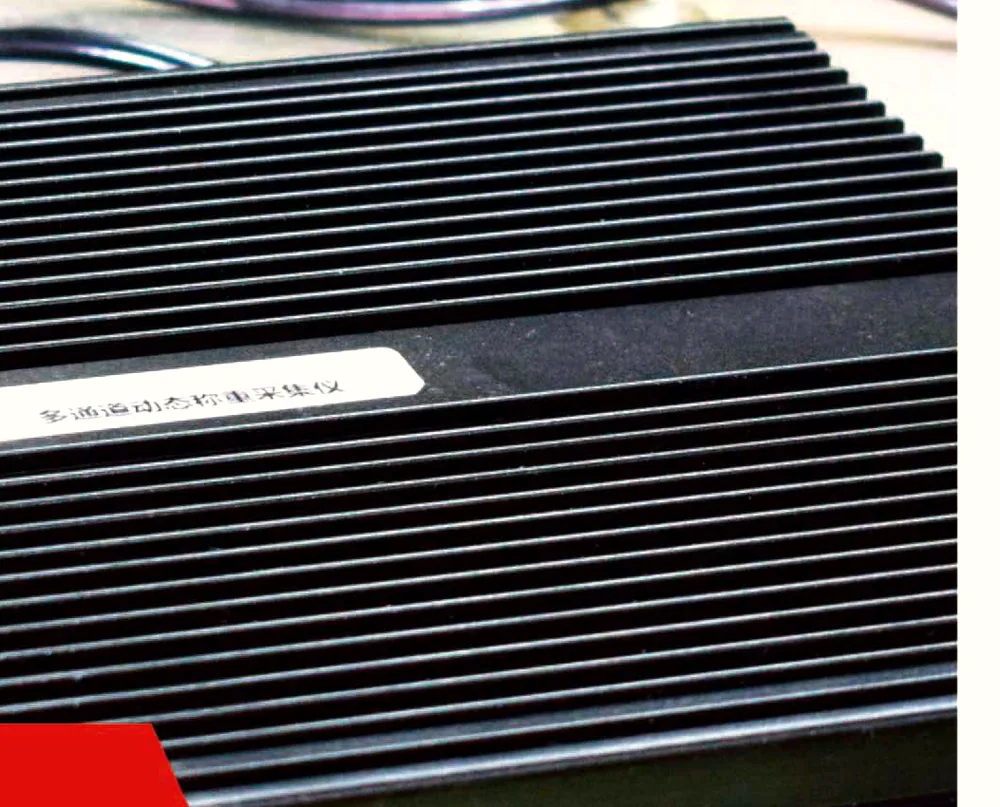
The plate is the WIM subsystem. Around it sit license plate recognition, an LED information board that prompts on overspeed and overload, and a data acquisition subsystem. Software handles image capture and video linkage, S-shape detour, rush-scale and drag-scale anti-cheating, 7x24 unattended running, offline local cache and multi-site centralized management. Typical homes are toll stations and highway entrances, overload control stations and port or logistics-park lanes.
WIM plate FAQ
What does full-wheel load integration actually fix?
When a vehicle drifts off centre, straddles a line or drives irregularly across a plate, a simple sensor reads it wrong. Integrating the full wheel load removes that eccentric-load error so the gross figure stays stable.
Which accuracy class is it?
Our manual states dynamic accuracy of ±0.5%, with gross weight at Class 1 and single axle at Class E. We quote those terms as written.
Can the system run unattended?
Yes. The WIM system layer supports 7x24 unattended operation, offline local cache and multi-site centralized management, with image capture and video linkage.
How is cheating handled?
The software flags S-shape detours, rush-scale and drag-scale behaviour, so an enforcement record reflects an actual pass rather than a manoeuvre.
What else is in the system?
The wide-flange plate WIM subsystem, license plate recognition, an LED information board for overspeed and overload prompts, and a data acquisition subsystem.
Building a WIM lane?
Send the lane count, speed range and whether you need enforcement records. We will quote the plate and the subsystem together.
Check Stock Availability & PriceButtons open a quotation request; pricing and build slots are confirmed by email.